QL
Operational support that takes you beyond the 7-figure mark
Online Business Management Group Program and Mastermind
Business Coaches.
You haven't found your lane, you're dominating it.
But your operations doesn't reflect that.
Clients get results… but delivery feels heavier than it should.
The team is working… but not in sync. And still needing direction.
You’re still the bridge between every dept, every person, every decision.
Subconsciously, you've added these items to the "we'll cross that bridge when we get there" list. And now, it's time to cross the bridge. And it's going to be a lot harder to cross it with all you're carrying. It doesn't have to be this hard. With the right strategies and operations support in place, we can get over this bridge with ease.
You deserve an operations partner who sees your brilliance and protects your bandwidth.
Someone who brings brings structure to what you've been holding together with a tight fist. It's time to untighten it.
Your team moves in sync: Clear roles. Clear expectations. Clear communication (without everything flowing through you).
Launches run smoothly: Timelines, tasks, and touch points organized and executed without the chaos or last-minute scrambles.
Delivery feels consistent and clean: Programs and clients experience your brand at its highest standard — every time.
Meet My Clients Partners

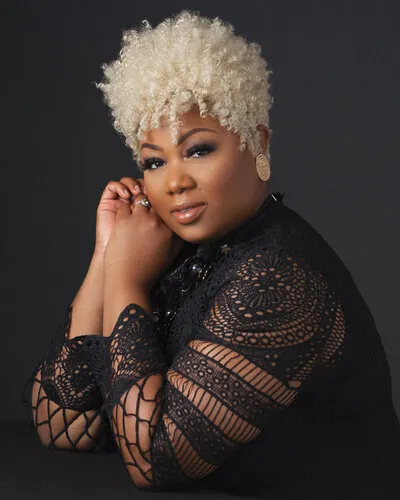


"Working with Q, directly restored elements of myself and the business..."
"Working with Q, directly restore elements of myself and the business that I needed and I didn't know that that is what I was asking for we first conneted. I'm able to now remember why I started..."
- Mahdi, ceo of Mahdi woodard
Hey! I'm qwantel, but you can call me q
I'm here to bring you the "it's handled" energy you crave in your business.
For the past 7 years, I’ve managed and operationalized online businesses just like yours — from group programs and digital communities to high-volume coaching ecosystems with growing teams.
Meet My Clients Partners
"She's been a major asset to my business & life..."
"Truly, Qwantel has been a Godsend. I needed direction for the growth of my business. I knew what I saw in mind but it was hard to pull the pieces together. Qwantel led my thoughts into the tangible with a kind, patient, yet action-oriented fashion. She didn't allow any of my goals to fall through the cracks, keeping me in line by laying out content, processes and procedures to guide my trajectory. She's been a tremendous asset to my business and life. Qwantel is a professional that can be trusted to deliver with excellence in all she does. I'd highly recommend her."
- Kanishia, ceo of The kani hair group
Meet My Clients Partners
"A right-hand partner and data wizard all in one..."
"I love our dynamics in general! She thinks about the client delivery and she thinks about the data and operations and systems side of things. It' like having a right-hand partner and data wizard all in one..."
- taeler, ceo of taeler de haes
Meet My Clients Partners
"I discover something new, every single time we're together!"
"Q is definitely worth every single penny! Since working with her I feel confident that my backend is handled and I can focus on what I need to keep my business running. I discover something new every single time we're together..."
- jasmine, ceo of baddies and budgets
On the Ops Blog
How to Choose the Right CRM (and Make It Work for You)
When it comes to choosing a CRM, you may feel like Jasmine from Aladdin, experiencing a whole new world.
Decision fatigue is real because there are too many options.
No CRM comes “ready to run.”
You can buy HubSpot, Salesforce, Pipedrive, HighLevel—whatever the platform—but it won’t organize your business for you.
The right CRM is the one that matches how your team actually works, scales with your processes, and becomes a trusted source of truth instead of a digital filing cabinet.
Let’s walk through how to evaluate, choose, and design a CRM that your business will still love two years from now.
Step 1: Define What The CRM Needs to Do (Not What It Needs to Have)
Most people start their CRM search with features: “Does it have pipelines? Email integration? AI?”
That’s backward.
Start with function, not features. Ask:
What part of our business needs more clarity or consistency?
Who will use this daily—and for what purpose?
What decisions do we want to make faster?
Then map it to use cases, not a feature checklist.
Example:
Instead of “We need automation,” say “We need automated lead routing when a deal is created.”
Instead of “We need dashboards,” say “We need to track conversion rates from demo to close weekly.”
Once your problems are defined, it becomes clear which platform can solve them—and which ones just add noise.
Step 2: Match the Platform to Your Complexity
The best CRM for a two-person startup isn’t the best one for a 200-person sales org.
Here’s a quick framework I use when evaluating platform fit:
Pro Tip:Always pick the simplest platform that can grow with you, not the most complex one you can afford. You can upgrade features later—but you can’t undo confusion.
Step 3: Design for Process, Not Just Pipeline
CRMs break when they’re set up like spreadsheets.
Before importing a single contact, define your core process flow—the journey a record takes from start to finish.
For example:
Marketing captures a lead
Sales qualifies it
RevOps converts it to an opportunity
Success onboards the customer
Finance closes the loop
Now translate that process into stages, fields, and automations.
If your process isn’t clear, your CRM will just multiply the chaos.
Tip: Document your lifecycle stages before you configure pipelines. A good CRM mirrors your business flow, not the other way around.
Step 4: Build Around Data Standards from Day One
Data is the heartbeat of your CRM.
But most teams skip structure in favor of speed—and pay for it later.
Here’s how to set up clean data from the start:
Standardize property names (e.g., “Lead Source” vs. “Source of Lead”)
Use dropdowns, not free text, wherever possible
Assign ownership for each key field
Define data rules: when something’s created, updated, and archived
Even if you’re small now, those rules prevent massive cleanup projects later.
Step 5: Plan Your Automation Strategy Intentionally
Automation is where CRMs either scale beautifully—or break spectacularly.
Start small.
Build automations that support clarity and consistency first:
Lead assignment and notifications
Lifecycle updates when deals change
Internal handoff automations between departments
Avoid “one-workflow-to-rule-them-all” setups.
Keep them modular: each automation should do one job, with clear triggers and owners.
And always document them. The most dangerous workflow is the one nobody understands.
Step 6: Choose Visibility Tools That Create Alignment
Dashboards shouldn’t be decoration—they should drive decisions.
When evaluating CRMs, look at:
How easily can you filter and visualize data?
Can each team get a view that actually matters to them?
Can leadership see outcomes, not just activity?
You want a CRM that helps teams see how their work connects.
If everyone’s working from different spreadsheets, you don’t have alignment—you have opinions.
Step 7: Prioritize Adoption Like It's a KPI
Even the most perfectly architected CRM fails without user adoption.
A few ways to keep engagement high:
Provide clear SOPs or quick Loom walkthroughs for every process
Share updates when something changes—never surprise users
Nominate internal “system champions” for each team
Make the CRM useful for the people who log in daily (if they see value, they’ll use it)
Remember: adoption isn’t training once. It’s ongoing enablement.
Common CRM Selection Mistakes
Buying before mapping your process
Over-customizing on day one
Ignoring data standards until it’s a mess
Building automations too early
Assuming adoption happens naturally
Wrapping it Up
The right CRM is about fit, clarity and follow-through.
When you choose intentionally - and build around data, process, automation, visibility and adoption - your CRM becomes the central nervous system of your business. It become where data lives and where growth happens.
Thank you so much for reading!
Keep up the momentum with one or more of these next steps:
📣 Sharing helps spread the word, and you’ll look like a total genius when someone receives this blog recommendation from you. + Posts are formatted to be easy to read and share.
📲 Hang out with me on LinkedIn. Don’t be afraid to say hello or message me.
📬 Want to meet online? Schedule a call to connect with me. I'm happy to discuss system, RevOps and grow a new connection.
📊 Need a second set of expert eyes? Book a CRM Audit and Get a 90-day roadmap that helps your systems run cleaner, faster, and smarter. Schedule a CRM Audit Discovery Call. to get started.


WATCH & LEARN
Weekly tips to build and
grow your OBM business.
SERVICES
all services
OBM Retainer
mentorship
QL
Streamlining Operations, Systems and Teams for eCommerce, group program and mastermind CEOs.
EXPLORE
speaking
view resources
visit the shop
At Qwantel Latay having to choose between scaling your business and showing up as your whole authentic self should never be a thing. Which is why on THIS side of Beyonce’s internet we fully celebrate all colors, genders, and lifestyles and fully back minority and LGBTQ led businesses.
And honey, if you can’t roll with that consider this one less tab in your browser to keep open.
privacy policy
terms & conditions
digital product terms and conditions
disclaimer
BACK TO TOP ↑