QL
Operational support that takes you beyond the 7-figure mark
Online Business Management Group Program and Mastermind
Business Coaches.
You haven't found your lane, you're dominating it.
But your operations doesn't reflect that.
Clients get results… but delivery feels heavier than it should.
The team is working… but not in sync. And still needing direction.
You’re still the bridge between every dept, every person, every decision.
Subconsciously, you've added these items to the "we'll cross that bridge when we get there" list. And now, it's time to cross the bridge. And it's going to be a lot harder to cross it with all you're carrying. It doesn't have to be this hard. With the right strategies and operations support in place, we can get over this bridge with ease.
You deserve an operations partner who sees your brilliance and protects your bandwidth.
Someone who brings brings structure to what you've been holding together with a tight fist. It's time to untighten it.
Your team moves in sync: Clear roles. Clear expectations. Clear communication (without everything flowing through you).
Launches run smoothly: Timelines, tasks, and touch points organized and executed without the chaos or last-minute scrambles.
Delivery feels consistent and clean: Programs and clients experience your brand at its highest standard — every time.
Meet My Clients Partners




"Working with Q, directly restored elements of myself and the business..."
"Working with Q, directly restore elements of myself and the business that I needed and I didn't know that that is what I was asking for we first conneted. I'm able to now remember why I started..."
- Mahdi, ceo of Mahdi woodard
Hey! I'm qwantel, but you can call me q
I'm here to bring you the "it's handled" energy you crave in your business.
For the past 7 years, I’ve managed and operationalized online businesses just like yours — from group programs and digital communities to high-volume coaching ecosystems with growing teams.
Meet My Clients Partners
"She's been a major asset to my business & life..."
"Truly, Qwantel has been a Godsend. I needed direction for the growth of my business. I knew what I saw in mind but it was hard to pull the pieces together. Qwantel led my thoughts into the tangible with a kind, patient, yet action-oriented fashion. She didn't allow any of my goals to fall through the cracks, keeping me in line by laying out content, processes and procedures to guide my trajectory. She's been a tremendous asset to my business and life. Qwantel is a professional that can be trusted to deliver with excellence in all she does. I'd highly recommend her."
- Kanishia, ceo of The kani hair group
Meet My Clients Partners
"A right-hand partner and data wizard all in one..."
"I love our dynamics in general! She thinks about the client delivery and she thinks about the data and operations and systems side of things. It' like having a right-hand partner and data wizard all in one..."
- taeler, ceo of taeler de haes
Meet My Clients Partners
"I discover something new, every single time we're together!"
"Q is definitely worth every single penny! Since working with her I feel confident that my backend is handled and I can focus on what I need to keep my business running. I discover something new every single time we're together..."
- jasmine, ceo of baddies and budgets
On the Ops Blog
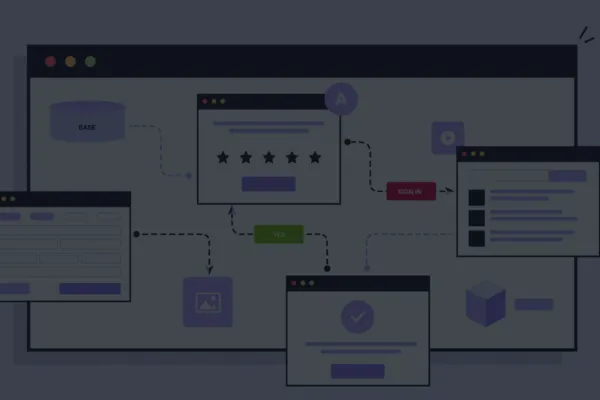
How to Design Automations That Don’t Break Every Time You Grow
Every growing business hits the same wall.
The first thing to crack isn’t your CRM.
It’s not your team.
It’s your automations.
What once worked perfectly for 50 deals a month collapses under 500.
What once made life easier now becomes the reason someone says, “Don’t touch that—it’ll break everything.”
It’s not that your platform failed you. It’s that your system was built for speed, not scale.
Good automation isn’t about adding more triggers, zaps, or workflows.
It’s about creating structure — logic that evolves as your business does.
Let’s walk through the framework for designing automations that grow with you, not against you.
Step 1: Map the Process before you automate everything
Every broken workflow starts with a missing map. If you can’t draw it clearly, you can’t automate it clearly.
Before building anything, map three things:
Entry and exit points — What event starts this process, and what defines it as complete?
Owners — Who’s responsible for each step (and who fixes it when it breaks)?
Systems involved — Which tools exchange data, and where does the “source of truth” live?
Pro Tip: Use a tool like Puzzle to visualize both human and system handoffs. You’ll see bottlenecks and logic conflicts before you ever open your automation builder.
Step 2: Build Modular Automations, Not Monsters
I'll be honest. This one is more of an 80/20 rule. Because it's hard NOT to do. Complex workflows are fragile — one change breaks everything.
Until everyone has gotten into the habit of true adoption of best practices of automations, design your automations to be modular:
Each workflow should do one job.
Use triggers or status updates to hand off between workflows.
Document the purpose in one sentence.
Example:
“When a deal moves to Contract Sent, notify Finance and create the onboarding ticket.”
That’s modular. If onboarding changes, you update that single workflow—not twenty dependent ones.
Step 3: Layer In Error Handling and Alerts
Growth brings volume. And volume brings failure points.
If you don’t know when something breaks until a teammate tells you, your automations aren’t scaling — they’re guessing.
Add feedback loops from day one:
Slack or email alerts for failed actions
Dashboards tracking automation success rates
Error logs with record ID, workflow name, and time
The goal: know when something breaks before your team feels it.
Step 4: Review Automations Quarterly — Like Assets, Not Afterthoughts
Your automations deserve the same maintenance as your systems.
Once per quarter:
Audit every active workflow for duplicates or outdated logic
Archive unused ones
Review triggers and filters for changed field names or criteria
Check ownership—does the right person still manage it?
Create a simple Automation Database (in Airtable, Coda, or Notion) with:
Workflow name
Owner
Purpose
Last reviewed
Notes or next update date
Documentation is what turns “tribal knowledge” into team knowledge.
Step 5: Design for Visibility, Not Dependency
If your automations live in one person’s head, you’re already at risk.
Make your systems discoverable:
Use Supered or Notion to embed workflow notes directly in your CRM (or tool)
Adopt clear naming conventions (e.g., [Stage Change] → Create Onboarding Ticket)
Keep an internal “System Map” showing data flow and tool handoffs
Visibility kills dependency.
Dependency is what makes automation brittle.
Step 6: Test Like a QA Team, Not a User
Testing is where scalability starts.
Before you turn anything on:
Run test data through the full sequence
Confirm every connected system updates correctly
Check access permissions (most failures come from these)
Have another teammate review your logic
If it breaks in testing, that’s a gift it means your live data won’t.
Step 7: Version Everything
Growth means change: new tools, new triggers, new teams.
Version your workflows like a developer would:
Keep a running changelog (v1.3 – Added Slack alert on contract creation)
Save screenshots or exports before edits
Note what was rolled back or deprecated
A system without history is one that repeats its mistakes.
Common Automation Red Flags
You might be overdue for a rebuild if you’ve ever said:
“We can’t update this—no one knows how it was built.”
“We cloned this from a test project, and now it fires twice.”
“It only works if you do Step 3 manually first.”
These are symptoms of reactive automation, not scalable automation.
Quick Wins You Can Do Today
Document every workflow name and purpose in one spreadsheet
Add Slack alerts for failed actions
Consolidate key fields into a CRM Data Dictionary
Review one automation per week for optimization
Assign owners to your top ten most critical workflows
Small, consistent maintenance prevents massive rebuilds later.
Wrapping it Up
Scalable automations follow the same pattern as scalable teams:
Clear ownership
Clean data
Strong communication
Continuous review
If your workflows feel fragile, it’s not because you built too many — it’s because they were never designed to evolve.
Design them with structure, visibility, and version control.
Then watch your automations grow at the same pace as your business.
Thank you so much for reading!
Keep up the momentum with one or more of these next steps:
📣 Sharing helps spread the word, and you’ll look like a total genius when someone receives this blog recommendation from you. + Posts are formatted to be easy to read and share.
📲 Hang out with me on LinkedIn. Don’t be afraid to say hello or message me.
📬 Want to meet online? Schedule a call to connect with me. I'm happy to discuss system, RevOps and grow a new connection.
📊 Not sure which one fits into your tech stack for your CRM. Book a CRM audit and I’ll map your processes, stack, and governance needs—then recommend the right platform (and rollout plan). Schedule a CRM Audit Discovery Call. to get started.


WATCH & LEARN
Weekly tips to build and
grow your OBM business.
SERVICES
all services
OBM Retainer
mentorship
QL
Streamlining Operations, Systems and Teams for eCommerce, group program and mastermind CEOs.
EXPLORE
speaking
view resources
visit the shop
At Qwantel Latay having to choose between scaling your business and showing up as your whole authentic self should never be a thing. Which is why on THIS side of Beyonce’s internet we fully celebrate all colors, genders, and lifestyles and fully back minority and LGBTQ led businesses.
And honey, if you can’t roll with that consider this one less tab in your browser to keep open.
privacy policy
terms & conditions
digital product terms and conditions
disclaimer
BACK TO TOP ↑